GLP-1 EDUCATION | KZ WELLNESS

Understanding GLP-1 Medications

Learn how GLP-1 medications work | Evidence-informed patient education 

GLP-1 medications have changed the way healthcare professionals approach weight management and type 2 diabetes. You may have heard of medications such as Wegovy, Ozempic, Zepbound, or Mounjaro, but what exactly are GLP-1 medications, and how do they work?

GLP-1 medications influence appetite, digestion, and blood sugar regulation. Understanding how these treatments work, their potential benefits, and their risks can help you make informed decisions about your health.

At KZ Wellness, we believe medical weight management begins with education, individualized care, and a comprehensive approach to long-term health.

What is a GLP-1?

GLP-1 stands for glucagon-like peptide-1, a hormone naturally produced in your intestines in response to eating.

GLP-1 belongs to a family of hormones called incretins, which help influence appetite and regulate blood sugar.

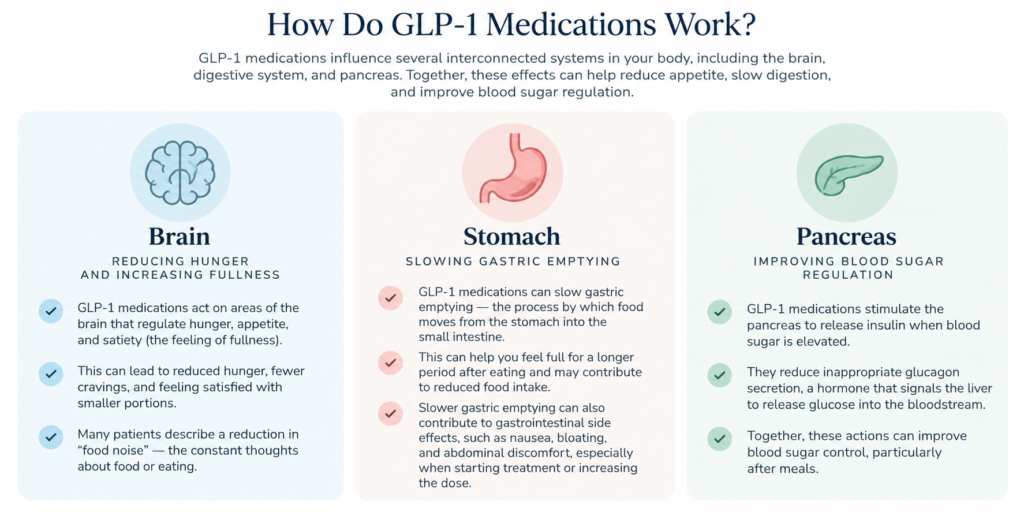
When you eat, GLP-1 helps your body respond to food by stimulating insulin release when blood sugar rises, reducing inappropriate glucagon secretion (this hormone cause blood sugar to rise), and communicating with areas of the brain involved in hunger and fullness.

GLP-1 receptor agonists are medications designed to activate these same hormone receptors. Unlike naturally occurring GLP-1, which is broken down rapidly, these medications are designed to provide longer-lasting effects.

How do GLP-1 Medications Work?

GLP-1 medications influence several interconnected systems involved in appetite, digestion, and blood sugar regulation. Three of the most important areas are the brain, stomach, and pancreas.

Types of GLP-1 Medications

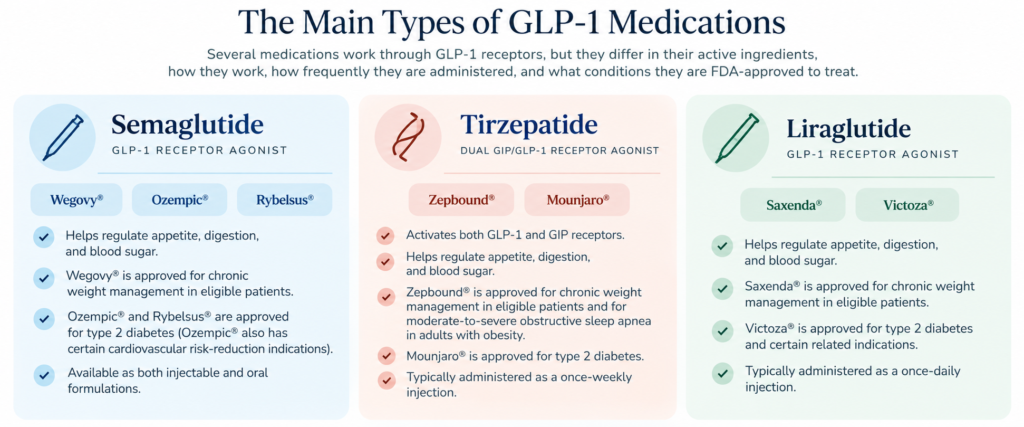
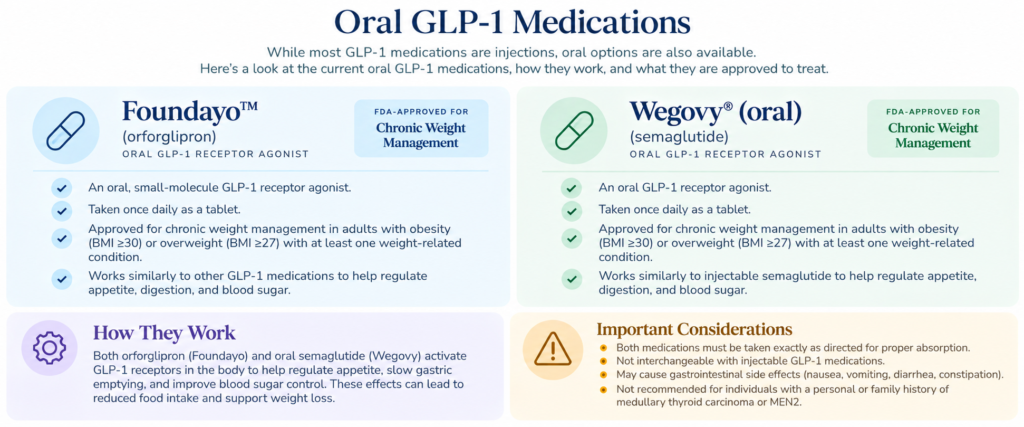
Several medications work through GLP-1 receptors, but not all GLP-1 medications are the same.

They differ in their active ingredients, how they work, how frequently they are administered, and what conditions they are FDA-approved to treat.

Some are approved for chronic weight management, while others are primarily used to treat type 2 diabetes.

Understanding these differences can help patients have more informed conversations with their healthcare providers.

Interested in exploring whether medical weight management is right for you? KZ Wellness provides personalized, medically supervised weight-loss care through telehealth for eligible patients in Connecticut.

Learn more about our Medical Weight Loss Program in Connecticut and how our team can help you develop an individualized treatment plan.


Medical disclaimer: This article is for educational purposes only and does not replace individualized medical advice. GLP-1 medications are prescription treatments with specific indications, contraindications, and potential adverse effects. A qualified healthcare professional should assess whether treatment is appropriate.

Zach Lavender, PA-C and Dr. Katie Daoud — KZ Wellness, PLLC
Medically reviewed and evidence-based guidance
Date Reviewed: October 15th, 2026
Source: https://www.niddk.nih.gov/health-information/weight-management/prescription-medications-treat-overweight-obesity#available