
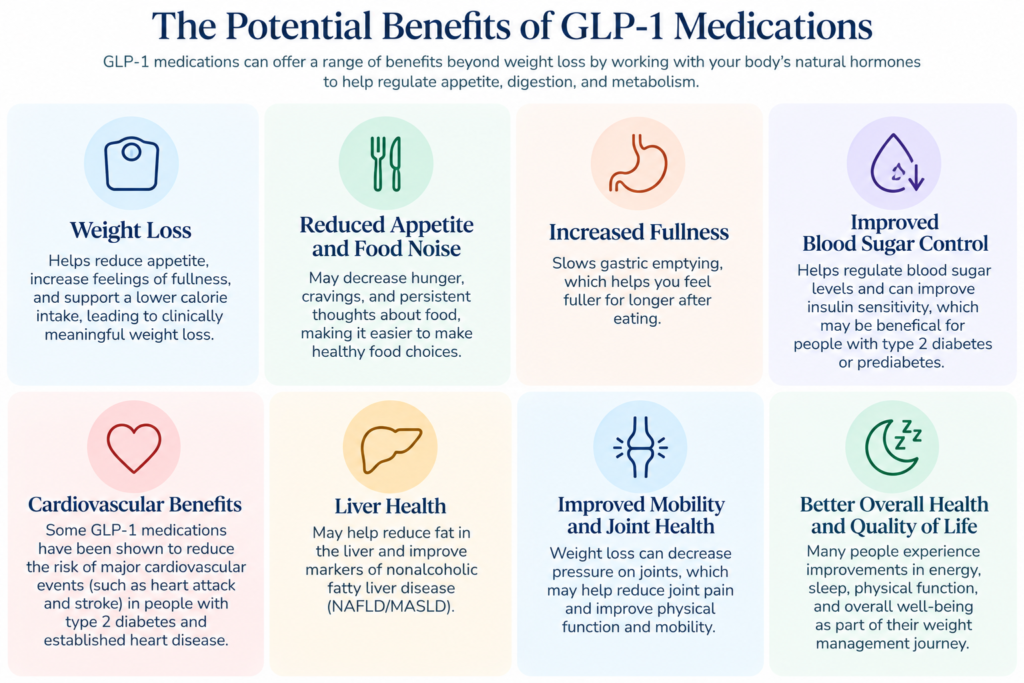
GLP-1 medications have changed the approach to medical weight management and type 2 diabetes. Although these medications are widely recognized for their ability to support weight loss, their potential benefits extend beyond the number on the scale.
GLP-1 medications influence appetite, feelings of fullness, blood sugar regulation, and several metabolic processes. Research has also demonstrated important cardiovascular, kidney, and other health benefits for certain medications in specific patient populations.
Understanding the benefits of GLP-1 medications can help patients make informed decisions about their health and determine whether medical weight management may be appropriate.
One of the most recognized benefits of GLP-1-based medications is their ability to support weight loss in eligible patients.
These medications influence appetite regulation and help people feel satisfied with smaller amounts of food.
Clinical trials have demonstrated substantial average weight reductions with certain medications used alongside lifestyle interventions.
For example:
Semaglutide 2.4 mg: In the STEP 1 trial, participants without diabetes experienced an average weight reduction of approximately 14.9% after 68 weeks, compared with 2.4% with placebo.
Tirzepatide: In the SURMOUNT-1 trial, participants without diabetes experienced average weight reductions of approximately 15% to 20.9% after 72 weeks, depending on the dose, compared with 3.1% with placebo.
These results are averages from specific clinical trials, not guarantees of individual outcomes. Tirzepatide activates both GLP-1 and GIP receptors.
Weight loss may also improve obesity-related health conditions and physical functioning.
GLP-1 medications affect pathways involved in appetite regulation, including signaling between the digestive system and the brain.
For some patients, treatment may lead to:
Less frequent or less intense hunger
Reduced desire to eat between meals
Greater satisfaction with smaller portions
Improved ability to recognize fullness
These effects can make it easier to follow a structured nutrition plan without experiencing the same intensity of hunger.
Importantly, the goal of treatment is not to eliminate hunger entirely. Adequate nutrition and hydration remain essential.
Some people experience frequent or intrusive thoughts about food, even when they are not physically hungry.
This experience is sometimes called food noise.
Patients taking GLP-1 medications may report:
Fewer persistent thoughts about food
Reduced cravings
Less preoccupation with their next meal
Greater ability to focus on activities unrelated to eating
Research suggests that GLP-1-based therapies can influence food cravings and responses to food-related cues.
However, food noise is an emerging research concept, and its reduction is not a separate FDA-approved indication for these medications.
Learn more: Read our resource, What Is Food Noise? Understanding Hunger, Appetite, and Satiety.
GLP-1 medications were originally developed to help manage type 2 diabetes.
They can improve blood sugar regulation by:
Increasing insulin secretion when blood glucose is elevated
Reducing inappropriate glucagon secretion
Slowing gastric emptying to varying degrees
Supporting weight loss, which may improve insulin sensitivity
For patients with type 2 diabetes, these effects can help reduce hemoglobin A1c and improve overall glycemic control.
GLP-1 medications generally have a low risk of hypoglycemia when used alone, although the risk increases when combined with insulin or sulfonylureas.
Not every GLP-1 medication is approved for diabetes treatment, and not every diabetes medication is approved for chronic weight management.
Obesity and type 2 diabetes are associated with increased cardiovascular risk.
Certain GLP-1 medications have demonstrated the ability to reduce major adverse cardiovascular events, such as cardiovascular death, heart attack, and stroke, in specific patient populations.
For example, the SELECT trial found that semaglutide 2.4 mg reduced the relative risk of major adverse cardiovascular events by approximately 20% compared with placebo among adults with established cardiovascular disease and overweight or obesity who did not have diabetes.
Some other GLP-1 medications have also demonstrated cardiovascular benefits in patients with type 2 diabetes and elevated cardiovascular risk.
Important: Cardiovascular outcome benefits are medication-specific and population-specific. They should not be assumed to apply equally to every GLP-1 medication or every patient.
Certain GLP-1 medications have demonstrated kidney-related benefits in clinical trials.
For example, the FLOW trial evaluated semaglutide in adults with type 2 diabetes and chronic kidney disease.
The trial found a reduction in a composite outcome involving major kidney disease events and cardiovascular or kidney-related death.
These findings are particularly important because diabetes and obesity can contribute to the development and progression of chronic kidney disease.
However, kidney benefits and approved indications vary by medication, and GLP-1 therapies are not a substitute for comprehensive kidney disease management.
Metabolic dysfunction-associated steatotic liver disease (MASLD), previously commonly called nonalcoholic fatty liver disease, is associated with obesity, insulin resistance, and metabolic dysfunction.
Weight loss and improved metabolic health can reduce liver fat in some patients.
Research on GLP-1-based medications has shown improvements in certain measures of liver fat and inflammation. Some therapies have also demonstrated benefits in clinical trials involving metabolic dysfunction-associated steatohepatitis (MASH).
These results are promising, but liver-related benefits depend on the specific medication, the patient’s condition, and the available evidence.
Patients with suspected liver disease should receive appropriate evaluation and monitoring rather than relying on weight-loss treatment alone.
Excess body weight can contribute to joint discomfort, reduced exercise tolerance, and limitations in daily activities.
For some patients, medically supervised weight loss may help improve:
Walking and physical activity tolerance
Mobility and everyday functioning
Weight-related joint symptoms
Physical aspects of quality of life
Clinical studies have demonstrated improvements in physical functioning and certain patient-reported outcomes with some GLP-1-based treatments.
These changes vary between individuals and should be viewed as potential benefits rather than guaranteed outcomes.
No. Although GLP-1 medications offer meaningful benefits for certain patients, they are not appropriate for everyone.
Potential adverse effects include nausea, vomiting, diarrhea, constipation, and abdominal discomfort. More serious risks and precautions depend on the medication.
Some GLP-1-based medications carry boxed warnings regarding thyroid C-cell tumors in rodents and are contraindicated in people with a personal or family history of medullary thyroid carcinoma or multiple endocrine neoplasia syndrome type 2 (MEN2).
Medication selection also requires consideration of pregnancy plans, medical history, other prescriptions, nutritional needs, and treatment goals.
A qualified healthcare professional should review the risks and potential benefits before prescribing treatment.
Yes. Certain medications have demonstrated benefits involving blood sugar control, cardiovascular outcomes, kidney health, and other obesity-related conditions. The evidence and FDA-approved indications differ by medication.
Some studies and patient reports suggest reductions in food cravings and food-related preoccupation. Individual responses vary.
Certain GLP-1 medications have been shown to reduce cardiovascular events in specific populations. These benefits should not be generalized to all medications.
GLP-1-based medications affect glucose-regulating pathways, but treatment decisions for patients without diabetes should be based on appropriate indications and overall clinical assessment.
Not necessarily. Appetite and weight can change after treatment is discontinued, and some people regain weight. Long-term management plans and follow-up are important.
At KZ Wellness, we believe successful weight management involves more than achieving a number on the scale.
Our Connecticut-based telehealth practice focuses on individualized medical care, evidence-based treatment, nutrition, physical activity, and long-term health.
When appropriate, prescription weight-management medications, including GLP-1/GIP-based therapies, may be incorporated into a personalized treatment plan.
Whether your goals involve weight management, appetite regulation, or improving metabolic health, our team can help evaluate available treatment options.
Interested in learning more?
Explore our Medical Weight Loss in Connecticut program or contact KZ Wellness to learn about our telehealth services.
Medical disclaimer: This content is provided for educational purposes only and does not constitute individualized medical advice. Treatment eligibility, medication indications, benefits, risks, and insurance coverage vary. Consult a qualified healthcare professional before starting or changing prescription medications.