
GLP-1 and GIP-based medications have become important treatment options for medical weight management and type 2 diabetes. Medications such as Wegovy, Ozempic, Zepbound, and Mounjaro can provide meaningful health benefits, but like all prescription medications, they can also cause side effects.
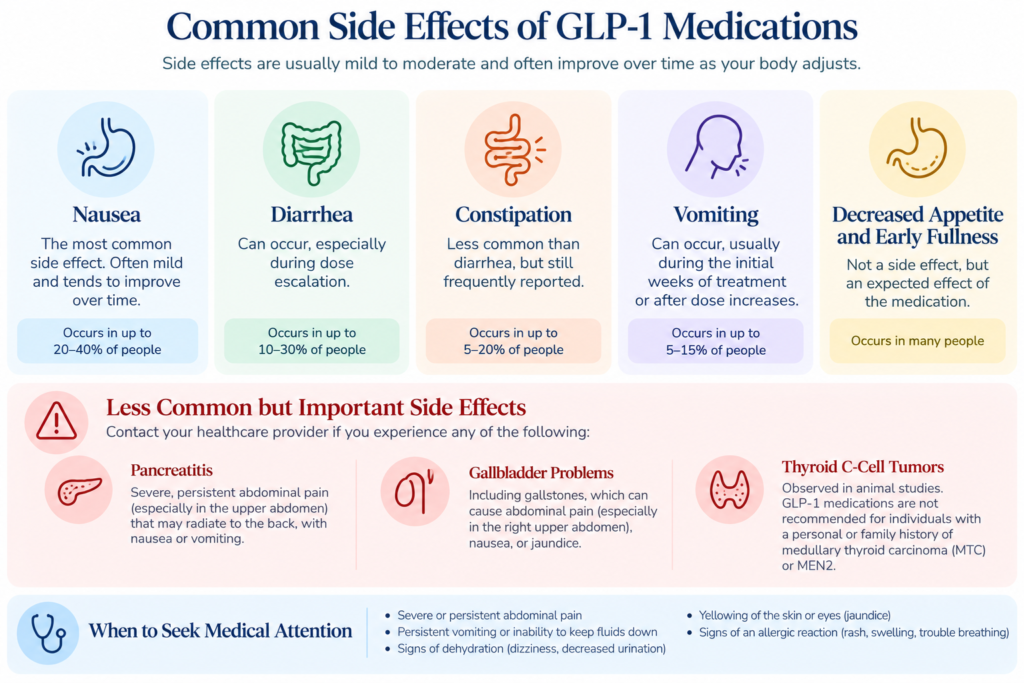
The most common GLP-1 side effects involve the digestive system, including nausea, vomiting, diarrhea, constipation, and abdominal discomfort.
Fortunately, many gastrointestinal symptoms are temporary and may improve as the body adjusts to treatment. Understanding what to expect, how to manage symptoms, and when to seek medical attention is an important part of safe treatment.
GLP-1 stands for glucagon-like peptide-1, a hormone involved in appetite regulation, blood sugar control, and digestion.
GLP-1 receptor agonists, such as semaglutide, activate receptors that help regulate hunger and fullness. Tirzepatide, the active ingredient in Zepbound and Mounjaro, activates both GLP-1 and glucose-dependent insulinotropic polypeptide (GIP) receptors.
These medications influence appetite-regulating pathways in the brain, insulin and glucagon signaling, and the rate at which food leaves the stomach.
Their effects on the digestive system help explain why nausea, fullness, constipation, and other gastrointestinal symptoms may occur.
Side effects are often more noticeable when treatment begins or when the medication dose increases.
Nausea is one of the most frequently reported side effects of GLP-1-based medications.
It may occur after eating, particularly following large meals or meals high in fat. Some patients experience nausea during the first several weeks of treatment or after increasing their dose.
Tips that may help:
Eat smaller meals rather than large portions.
Eat slowly and stop when comfortably full.
Limit greasy, fried, or high-fat foods if they worsen symptoms.
Stay hydrated by sipping fluids throughout the day.
Discuss persistent nausea with your prescribing clinician.
Changes in gastrointestinal motility and digestive function can contribute to diarrhea during treatment.
Symptoms may be mild and temporary, but frequent loose stools can increase the risk of dehydration.
Tips that may help:
Drink fluids regularly.
Consider oral rehydration solutions if fluid losses are significant.
Avoid foods or beverages that consistently worsen symptoms.
Contact your clinician if diarrhea is persistent, severe, or accompanied by signs of dehydration.
Some patients experience fewer bowel movements, harder stools, or difficulty passing stool while taking GLP-1 medications.
Changes in digestion, food intake, fluid consumption, and physical activity may contribute.
Tips that may help:
Maintain adequate hydration.
Include fiber-containing foods as tolerated.
Stay physically active when possible.
Discuss persistent symptoms or the need for constipation treatment with your clinician.
Severe abdominal pain, significant bloating, vomiting, or inability to pass stool or gas requires prompt medical evaluation.
Vomiting may occur, particularly during treatment initiation or dose escalation.
Repeated vomiting is more concerning because it can lead to dehydration, electrolyte abnormalities, and kidney injury.
Tips that may help:
Avoid large meals.
Eat slowly and choose smaller portions.
Take small sips of fluid frequently.
Contact your clinician if vomiting recurs or prevents adequate fluid intake.
Persistent vomiting or an inability to keep fluids down warrants urgent medical evaluation.
Additional digestive symptoms may include:
Abdominal discomfort or cramping
Bloating and gas
Belching
Indigestion
Heartburn or acid reflux
Eating smaller meals, avoiding individual food triggers, and remaining upright after eating may help.
Severe or persistent abdominal pain should never be assumed to be a routine medication side effect.
Some patients report fatigue, dizziness, headache, or injection-site reactions.
Hair loss has also been reported with certain weight-management medications. It may be associated with weight loss and nutritional changes, although individual causes should be evaluated.
Patients should discuss persistent symptoms with their clinician, particularly if food or fluid intake has become inadequate.
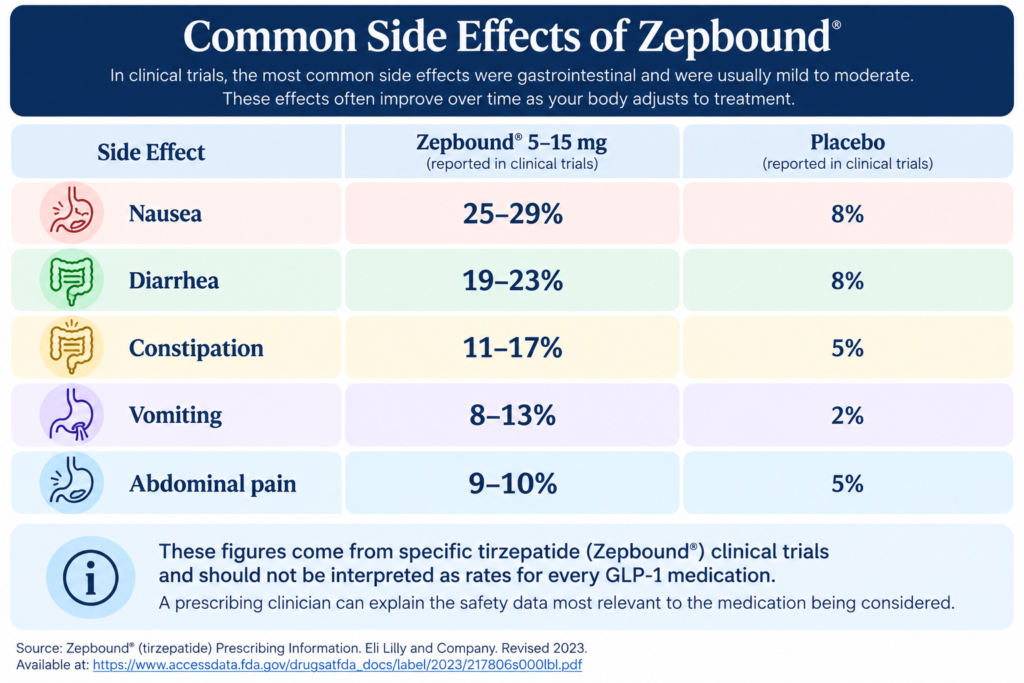
The frequency of side effects varies depending on the medication, dose, patient population, and clinical trial.
For example, in two pooled clinical trials of Zepbound for weight reduction, reported side effects included:
Although many side effects are manageable, certain symptoms require prompt evaluation.
Acute pancreatitis has been reported in patients receiving GLP-1-based medications.
Potential symptoms include:
Severe or persistent abdominal pain
Pain that may radiate to the back
Nausea or vomiting accompanying abdominal pain
If pancreatitis is suspected, stop taking the medication and seek immediate medical evaluation.
GLP-1-based weight-management treatment may be associated with gallbladder conditions, including gallstones and cholecystitis.
Rapid or substantial weight loss can also increase the risk of gallstones.
Warning symptoms include:
Upper abdominal pain, especially on the right side
Persistent pain after eating
Fever
Nausea or vomiting
Yellowing of the skin or eyes
These symptoms require medical assessment.
Persistent nausea, vomiting, or diarrhea can cause dehydration.
Severe dehydration may reduce kidney function and, in some cases, contribute to acute kidney injury.
Concerning symptoms include dizziness, fainting, markedly reduced urination, and inability to maintain fluid intake.
Patients with kidney disease or significant gastrointestinal symptoms may require additional monitoring.
GLP-1-based medications can slow gastric emptying and may cause significant gastrointestinal symptoms in some patients.
Certain medications are not recommended for people with severe gastroparesis.
Persistent vomiting, severe abdominal distension, or symptoms suggesting an intestinal obstruction require prompt medical evaluation.
GLP-1-based medications generally have a relatively low risk of hypoglycemia when used without other glucose-lowering medications.
However, the risk increases when combined with insulin or sulfonylureas.
Symptoms may include:
Sweating
Shakiness
Dizziness
Confusion
Palpitations
Patients taking diabetes medications may require changes to their treatment plan and should discuss glucose monitoring with their clinician.
Certain GLP-1-based medications, including semaglutide and tirzepatide products, carry a boxed warning regarding thyroid C-cell tumors observed in rodent studies.
It is unknown whether these medications cause medullary thyroid carcinoma in humans.
These medications are contraindicated in patients with a personal or family history of medullary thyroid carcinoma or multiple endocrine neoplasia syndrome type 2 (MEN2).
Patients should inform their clinician of relevant personal or family medical history before starting treatment.
Serious hypersensitivity reactions, including anaphylaxis and angioedema, have been reported with certain GLP-1-based medications.
Facial or throat swelling, difficulty breathing, or other symptoms of a severe allergic reaction require emergency medical care.
Weight-loss medications are not appropriate during pregnancy.
Patients who are pregnant, planning pregnancy, or breastfeeding should discuss medication-specific recommendations with their clinician.
For example, semaglutide labeling recommends discontinuation at least two months before a planned pregnancy.
Tirzepatide can reduce the effectiveness of oral hormonal contraceptives. Patients using oral contraception are advised to use a nonoral method or add a barrier method for four weeks after starting tirzepatide and for four weeks after each dose increase.
GLP-1-based medications delay gastric emptying.
Rare cases of pulmonary aspiration have been reported during procedures involving general anesthesia or deep sedation.
Patients should inform their anesthesia and procedural teams that they take these medications.
Whether a medication should be continued, adjusted, or temporarily held before a procedure depends on individualized clinical assessment and current guidance.
Before starting treatment, patients should review their medical history and current medications with their prescribing clinician.
Important considerations may include diabetes medications, kidney disease, gastrointestinal conditions, diabetic retinopathy, prior pancreatitis, gallbladder disease, and medications whose absorption may be affected by delayed gastric emptying.
Although side effects cannot always be prevented, several strategies may improve tolerability.
1. Start low and increase gradually. Follow the medication’s prescribed dose-escalation schedule. A clinician may recommend delaying an increase if symptoms are significant.
2. Eat smaller meals. Large portions can worsen nausea and uncomfortable fullness.
3. Eat slowly. Pay attention to fullness cues and avoid continuing to eat after becoming comfortably satisfied.
4. Stay hydrated. Adequate fluid intake is particularly important during episodes of vomiting or diarrhea.
5. Limit foods that trigger symptoms. Greasy, high-fat, or heavily spiced meals may worsen gastrointestinal discomfort in some individuals.
6. Maintain adequate nutrition. Reduced appetite should not result in prolonged inadequate intake of protein, fluids, or other essential nutrients.
7. Communicate with your clinician. Persistent side effects may require dose adjustments, evaluation for another cause, or a change in treatment.
Do not increase, skip, restart, or discontinue prescription doses outside your clinician’s instructions, except when immediate safety guidance calls for stopping the medication and seeking care.
Contact your healthcare provider promptly if you experience:
Persistent nausea, vomiting, or diarrhea
Difficulty maintaining adequate food or fluid intake
Significant constipation or worsening abdominal discomfort
Dizziness or signs of dehydration
Side effects that interfere with everyday activities
Seek urgent or emergency medical evaluation for:
Severe or persistent abdominal pain, particularly if it radiates to the back
Repeated vomiting with inability to keep fluids down
Severe abdominal swelling with vomiting or inability to pass stool or gas
Fainting, confusion, or markedly decreased urination
Fever with right upper abdominal pain or jaundice
Difficulty breathing or swelling of the face, lips, tongue, or throat
Many gastrointestinal symptoms occur during the first weeks of treatment or after dose increases and may improve over time. The duration varies between individuals and medications.
Both can cause nausea, diarrhea, vomiting, constipation, and other gastrointestinal symptoms. However, the frequency and severity of adverse effects vary by dose, and patient characteristics.
No. Nausea is common, but not everyone experiences it.
Yes. Constipation is a recognized side effect of several GLP-1-based medications. Hydration, dietary adjustments, activity, and clinician-directed treatment may help.
Sometimes. A clinician may recommend symptom-directed treatment after assessing severity, hydration status, medication interactions, and other possible causes. Patients should not routinely add medications without discussing persistent symptoms with their healthcare professional.
Mild symptoms do not always require discontinuation, but persistent or severe symptoms need medical guidance. Suspected pancreatitis or a serious allergic reaction requires stopping the medication and immediate evaluation.
At KZ Wellness, we believe medical weight management should balance potential treatment benefits with patient safety and long-term health.
Our Connecticut-based telehealth practice provides individualized medical evaluations, treatment planning, and ongoing follow-up for eligible patients.
When clinically appropriate, FDA-approved GLP-1 and GIP-based medications may be incorporated into a comprehensive approach that includes nutrition, physical activity, and ongoing monitoring.
Our goal is to help patients understand their treatment options, recognize possible side effects, and make informed decisions about their care.
Interested in learning more?
Explore our What Is a GLP-1? guide, Benefits of GLP-1 Medications resource, or Medical Weight Loss in Connecticut program.
Wegovy (semaglutide). U.S. prescribing information. DailyMed, National Library of Medicine.
Zepbound (tirzepatide). U.S. prescribing information. DailyMed, National Library of Medicine.
Gorgojo-Martínez JJ, et al. Clinical recommendations to manage gastrointestinal adverse events in patients treated with GLP-1 receptor agonists: A multidisciplinary expert consensus. Journal of Clinical Medicine. 2023.
2026 AHA/ACC/ADA/ASN Guideline for the Prevention, Detection, Evaluation, and Management of Cardiovascular-Kidney-Metabolic Syndrome. Journal of the American College of Cardiology.
Medical disclaimer: This article is for general educational purposes and does not replace individualized medical advice. Medication-specific risks, contraindications, and instructions vary. Consult a qualified healthcare professional about treatment decisions and seek urgent care for potentially serious symptoms.