
Nutrition plays an essential role in successful, sustainable weight management. While reducing overall calorie intake may support weight loss, the quality of the foods we eat is equally important for maintaining muscle, supporting metabolism, and promoting long-term health.
For individuals taking GLP-1 or GIP-based medications, such as semaglutide or tirzepatide, adequate nutrition becomes particularly important because these medications can significantly reduce appetite and overall food intake.
At KZ Wellness, we encourage a balanced approach to nutrition that prioritizes protein, fiber, hydration, and sustainable eating habits.
When we lose weight, we typically lose a combination of fat mass and lean body mass, which includes muscle.
Protein provides essential amino acids needed to maintain and repair muscle tissue.
Consuming adequate protein during weight loss can help:
Preserve muscle mass: Support the maintenance of lean tissue as body weight decreases.
Promote fullness: Protein-rich meals may help improve satiety and reduce hunger between meals.
Support recovery: Provide nutrients needed for muscle repair following physical activity.
Support long-term weight management: Help maintain strength and physical function as part of a balanced nutrition and exercise plan.
Protein intake is especially important when combined with regular resistance training.
Protein needs vary depending on age, body composition, activity level, medical history, and weight-management goals.
For generally healthy adults undergoing weight loss, a commonly considered protein target is approximately 1.2–1.6 grams of protein per kilogram of target body weight per day, when clinically appropriate.
This is a practical range used in some weight-management settings, not a universal requirement or an established GLP-1-specific guideline. Individual targets may be higher or lower.
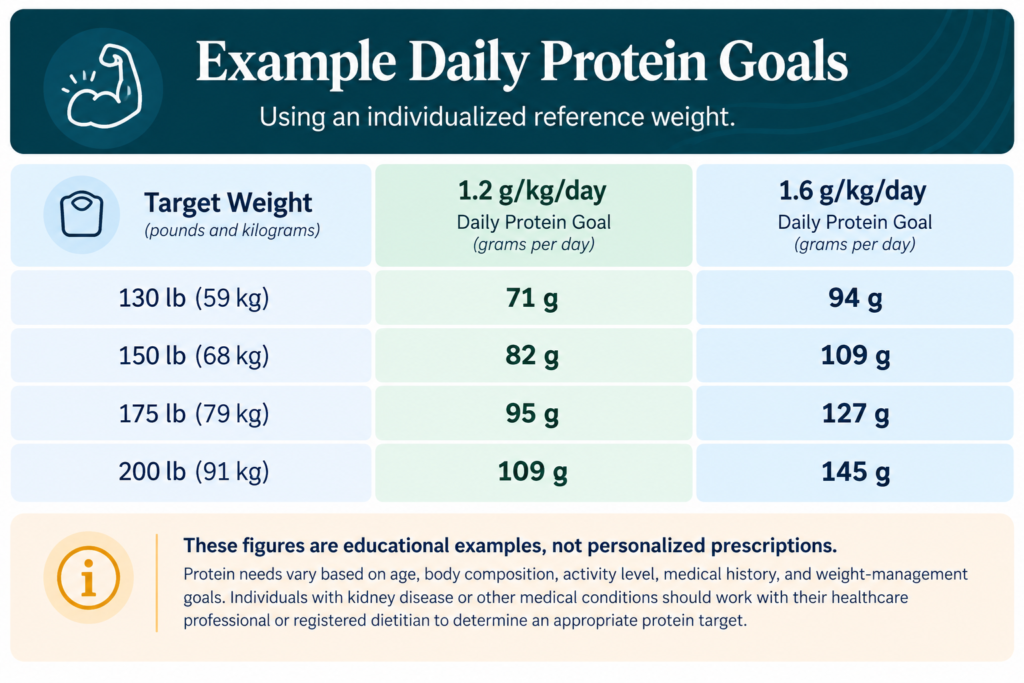
Estimate your daily protein needs to support muscle health during weight loss.
Educational estimate only, not a personalized protein prescription. Use an individualized target or reference weight as appropriate. Protein needs vary by age, activity, body composition, and medical history. Consult your healthcare professional or registered dietitian, especially if you have kidney disease or other medical conditions.
Protein can come from both animal-based and plant-based foods.
Examples include:
Chicken or turkey: Approximately 25–30 grams per 3–4-ounce cooked serving
Fish: Approximately 20–25 grams per 3–4-ounce serving
Greek yogurt: Approximately 15–20 grams per serving, depending on the product
Eggs: Approximately 6 grams per large egg
Cottage cheese: Approximately 12–14 grams per ½ cup
Tofu: Approximately 10–20 grams per serving, depending on the type
Beans and lentils: Approximately 7–9 grams per ½ cup cooked
Protein shakes: Often 20–30 grams per serving, depending on the product
Choose protein sources that fit your dietary preferences, health needs, and lifestyle.
Because GLP-1-based medications can reduce appetite and increase feelings of fullness, eating enough protein may become challenging.
A few strategies can help:
1. Prioritize protein at meals. Include a protein source with breakfast, lunch, and dinner.
2. Spread protein throughout the day. Distributing intake across meals may be easier than trying to consume most of your daily protein at once.
3. Choose nutrient-dense foods. When appetite is reduced, focus on foods that provide meaningful nutrition in smaller portions.
4. Consider protein-rich snacks. Greek yogurt, cottage cheese, eggs, or other convenient options can help fill nutritional gaps.
5. Pair protein with resistance training. Strength training provides an important stimulus for maintaining muscle during weight loss.
Protein shakes may be useful when meeting nutrition goals through regular meals is difficult, but they are not required for everyone.
Although protein is important, it is only one component of a balanced nutrition plan.
Fiber supports digestive health, bowel regularity, and fullness.
Good sources include vegetables, fruits, beans, lentils, and whole grains.
General adult fiber recommendations are approximately 14 grams per 1,000 calories consumed, although individual needs and tolerance vary.
Increase fiber gradually, particularly if experiencing bloating or constipation.
Adequate hydration supports normal body function and becomes especially important when taking medications that may cause nausea, vomiting, diarrhea, or constipation.
Water needs vary with body size, physical activity, climate, medical conditions, and dietary intake.
Aim for consistent fluid intake throughout the day, and discuss individualized fluid goals with your clinician if you have heart, kidney, or other conditions requiring fluid restrictions.
Adequate protein intake is particularly important during substantial weight loss because both fat mass and lean body mass may decrease. Protein, resistance training, and adequate overall nutrition can help support muscle health.
Prioritizing a protein source during meals may help patients with reduced appetite meet their nutritional goals. However, there is no universal requirement to eat foods in a particular order.
No. Many patients can meet their protein needs through regular foods. Protein shakes can be a convenient option when appetite or meal preparation makes adequate intake difficult.
Yes. More protein is not always better. Excessively high targets may displace other important nutrients and may be inappropriate for people with certain medical conditions.
At KZ Wellness, our Connecticut-based telehealth practice emphasizes sustainable weight management through individualized medical care, nutrition, physical activity, and evidence-based treatment options.
For patients receiving GLP-1 or GIP-based medications, maintaining adequate protein intake and supporting muscle health are important parts of a comprehensive weight-management plan.
Our goal is to help patients achieve meaningful health improvements while developing habits they can maintain long term.
Interested in learning more?
Explore our Medical Weight Loss Connecticut program or contact KZ Wellness to learn about our personalized approach to weight management.
Date Reviewed: October 27th, 2026
Medical disclaimer: This resource is intended for general educational purposes and does not replace individualized nutrition counseling or medical advice. Protein needs vary, particularly in patients with kidney disease, pregnancy, or other medical conditions. Consult your healthcare professional or registered dietitian before making significant dietary changes.